Who You Gon Call?
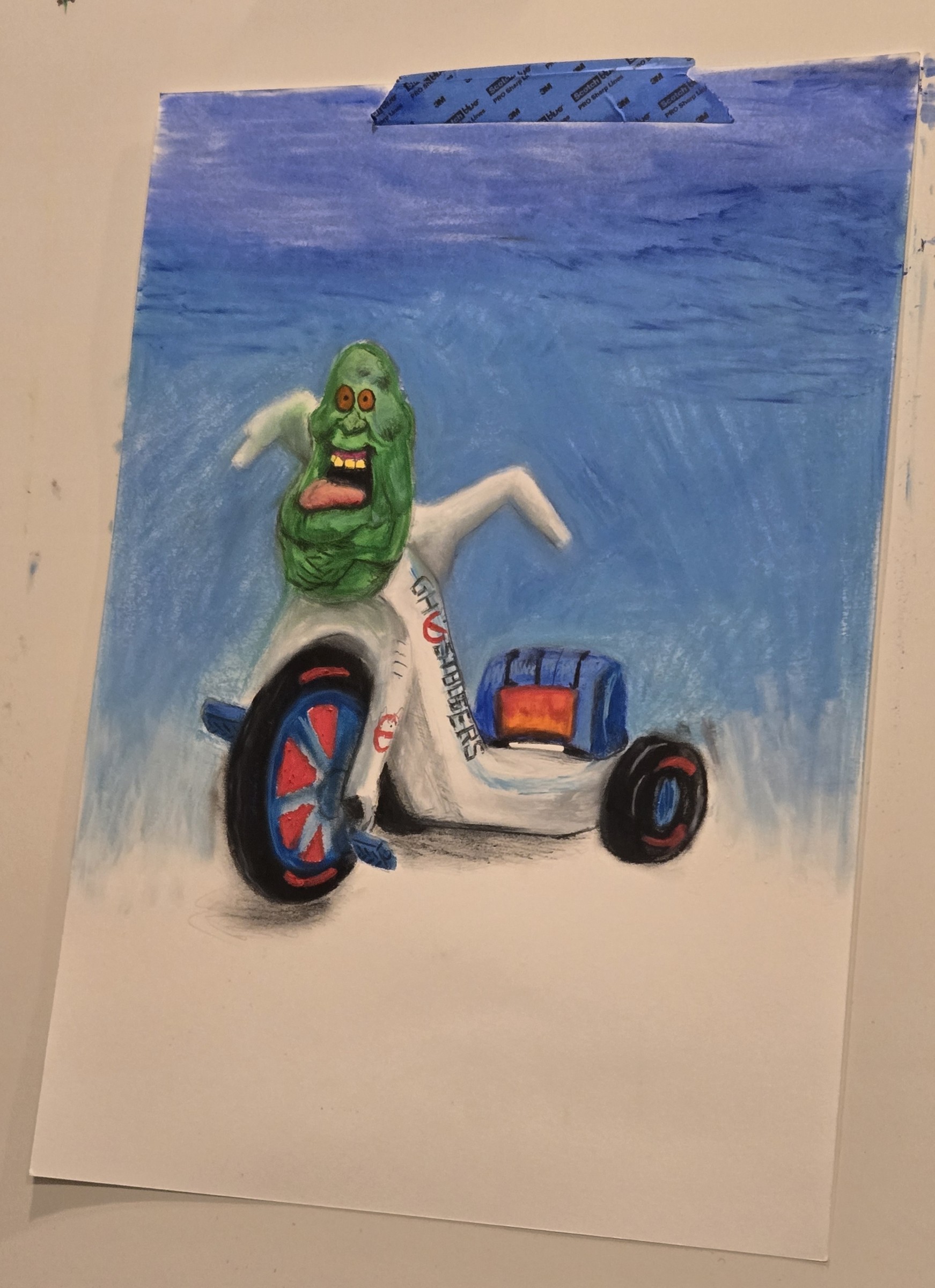
Of everything that happened that night, the part I remember most clearly is my Ghostbusters Big Wheel.
As a kid born in the '80s and growing up in the '90s, I thought the Ghostbusters were huge. They had the same mythical status as the Ninja Turtles and the Power Rangers. That Big Wheel might have been my most prized possession. By the end of the night, it had been broken over a grown man's head.
My life is so much more than trauma. But growing up Black, poor, and in a violent Pittsburgh neighborhood meant a steady stream of traumatic experiences. Art has always helped me make sense of what I've been through. Sharing those stories is also a way to invite people into the fullness of who I am. To me, telling them is a signal to others like me that you can persevere.
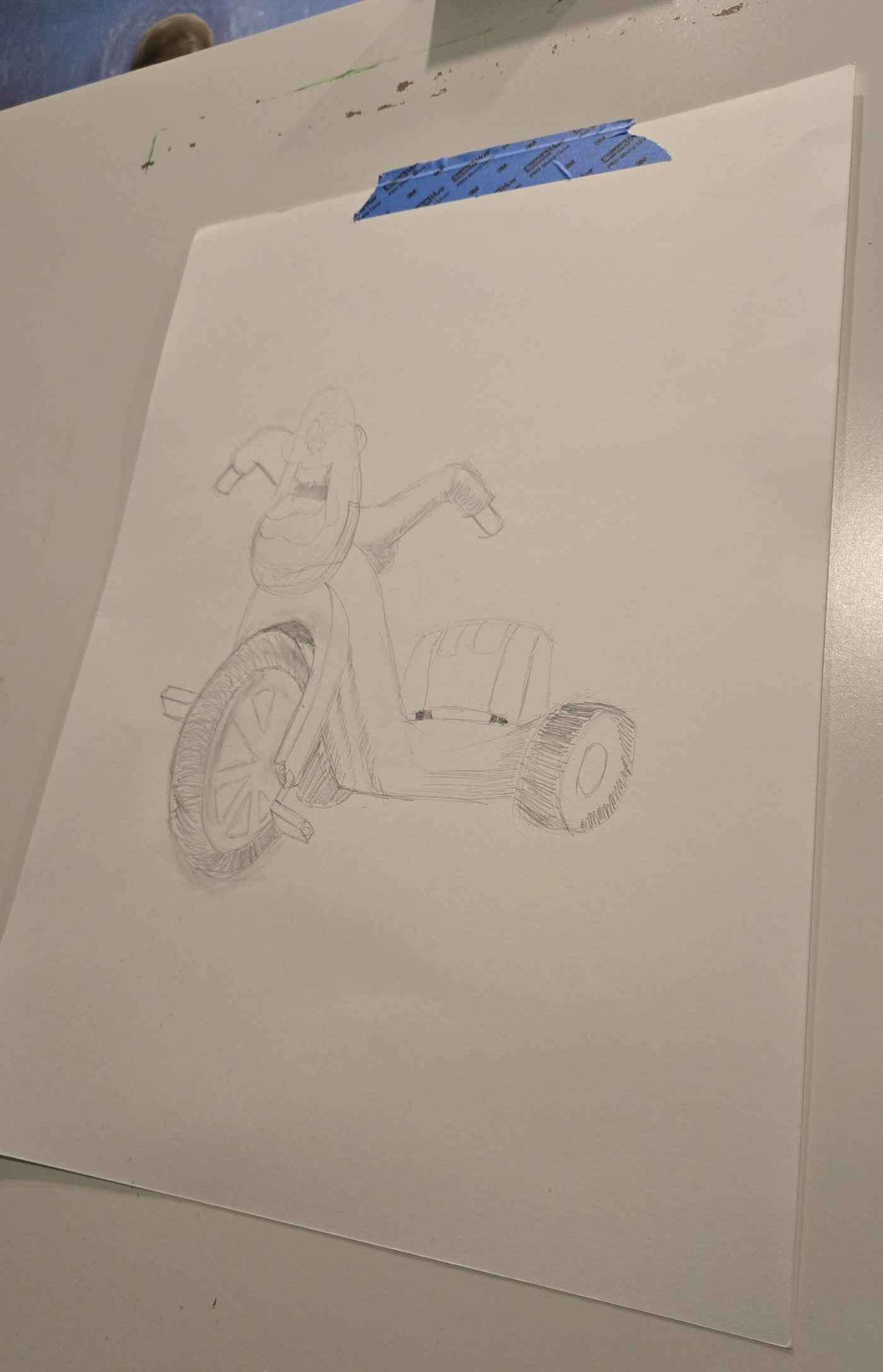
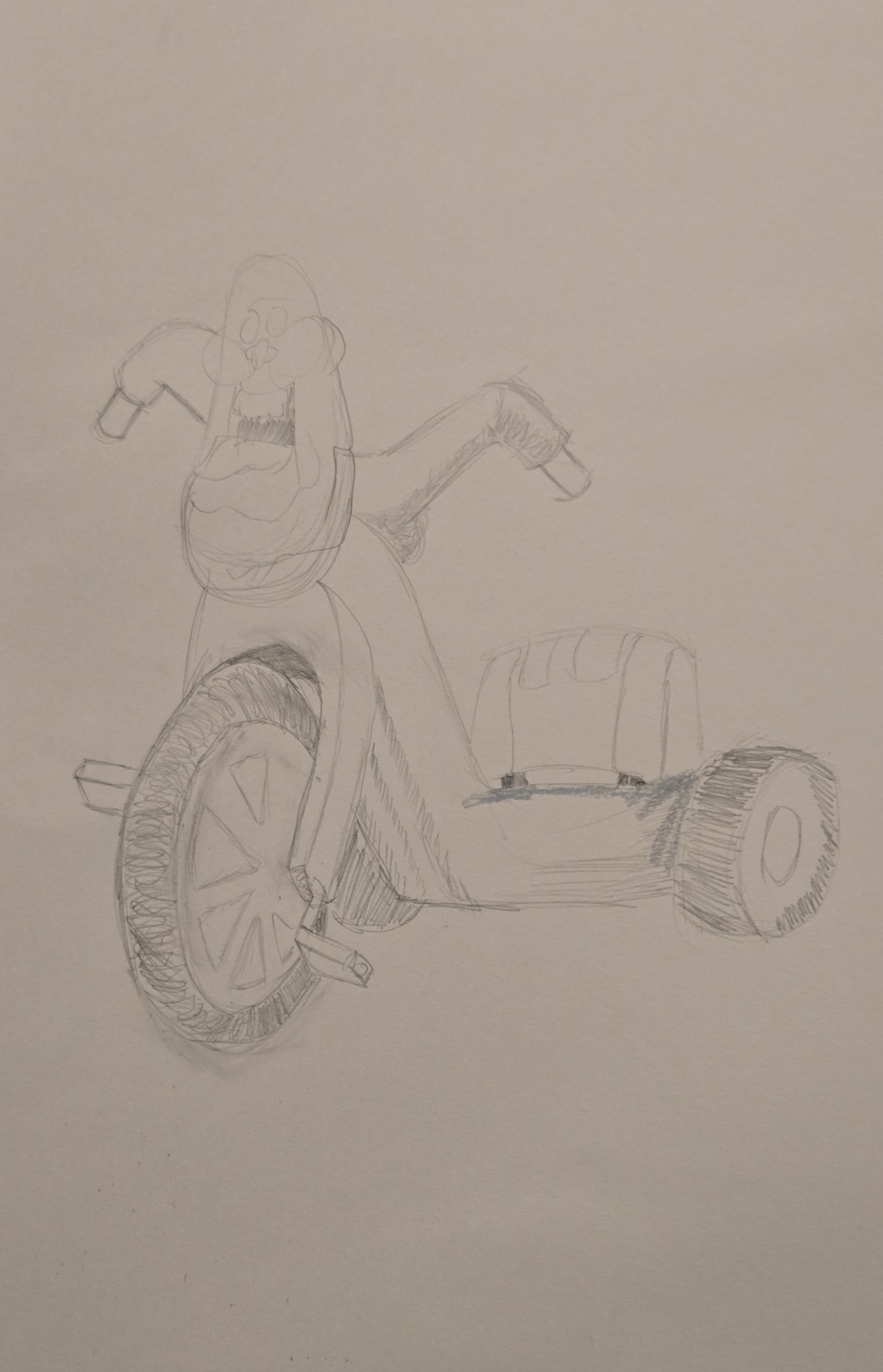
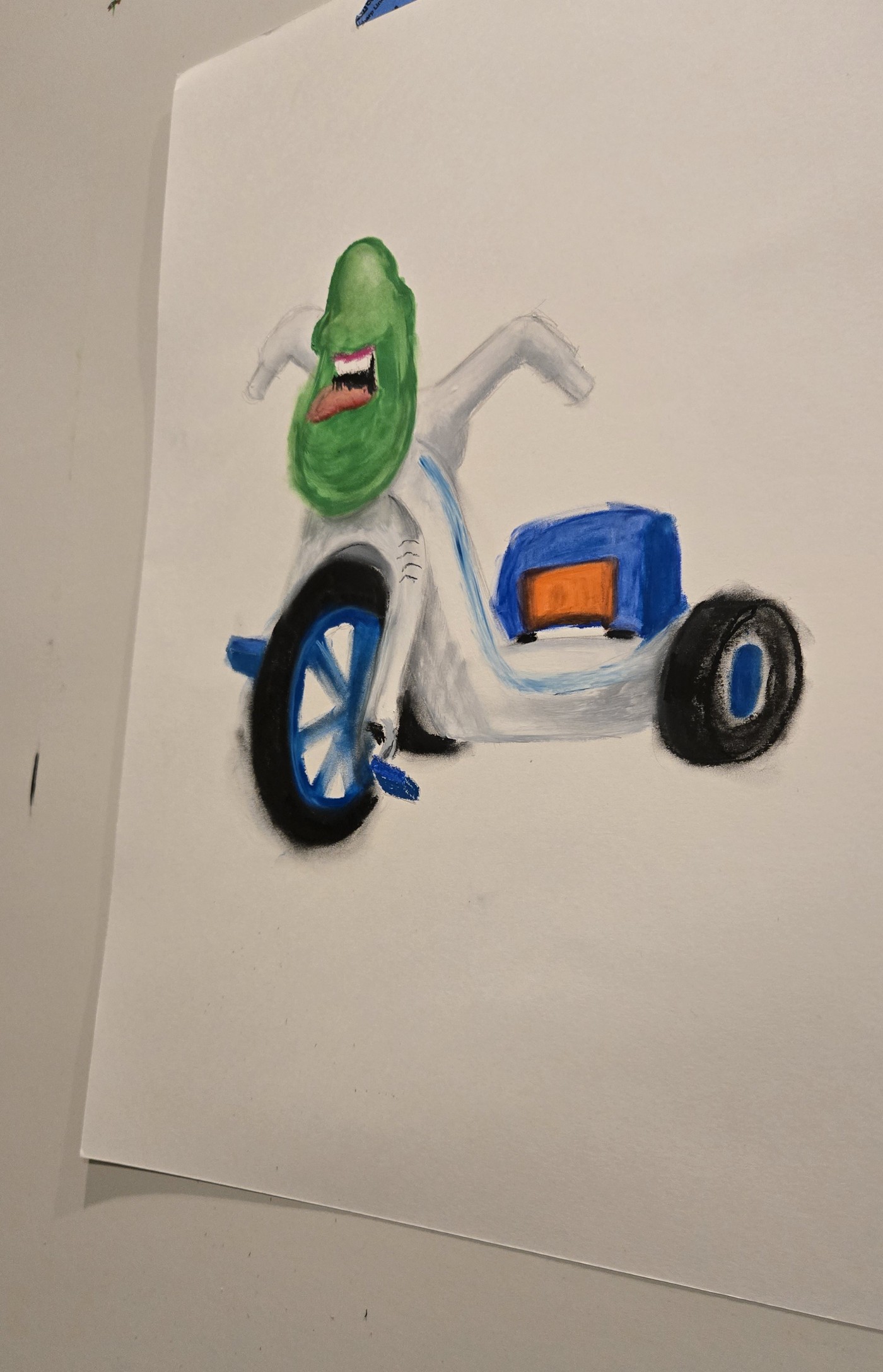
Many of my core memories are tied to some of the most traumatic moments in my life. Who You Gon Call? draws on one of them. It's an oil pastel drawing of that Big Wheel, part of Incomplete Memories, a series of rough, loose, quick sketches made as practice and expression rather than for exhibiting. The series comes out of a step in Jonice Webb's book Running on Empty called Breaking Down the Wall: intentionally tuning into my internal experiences and reaching out to the feelings I learned to actively suppress, or wall off, as a child.
In the drawing, the Big Wheel is white, with Ghostbusters lettering down the frame, a red-and-blue front wheel, and Slimer riding on the seat, all set against a wash of blue.
I'm not sure how old I was when it happened, but I couldn't have been older than six or seven. What has stayed with me is a story about community, and about broken promises.
Grandma's house
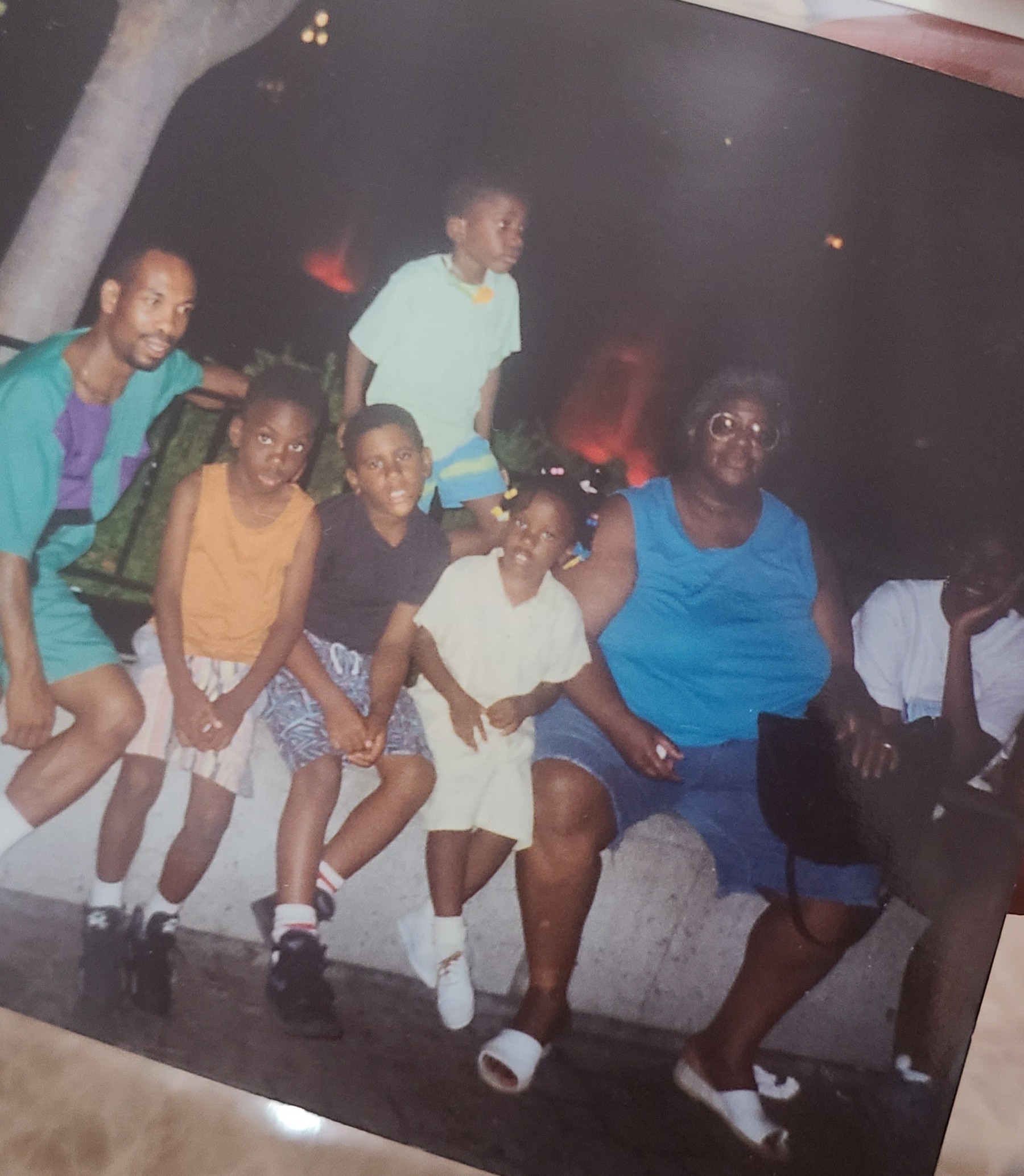
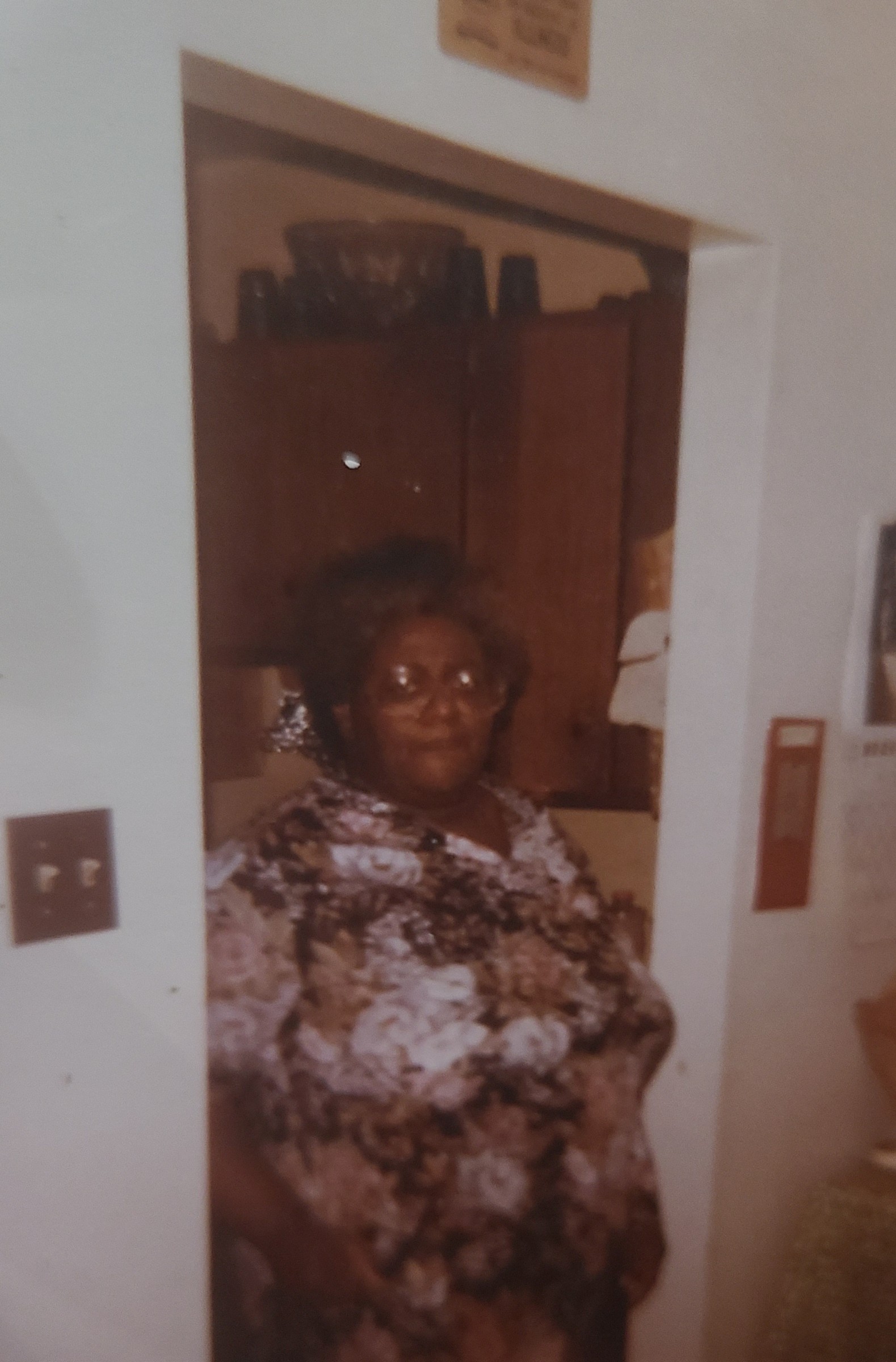
After we moved back to Pittsburgh from Seattle, we lived with my grandmother for a while. Even after we moved to a nearby neighborhood, I'd often go back to spend nights and weekends with her and my cousins. Her house wasn't my favorite place growing up, but it was where I learned a lot about family, love, community, and collective struggle.
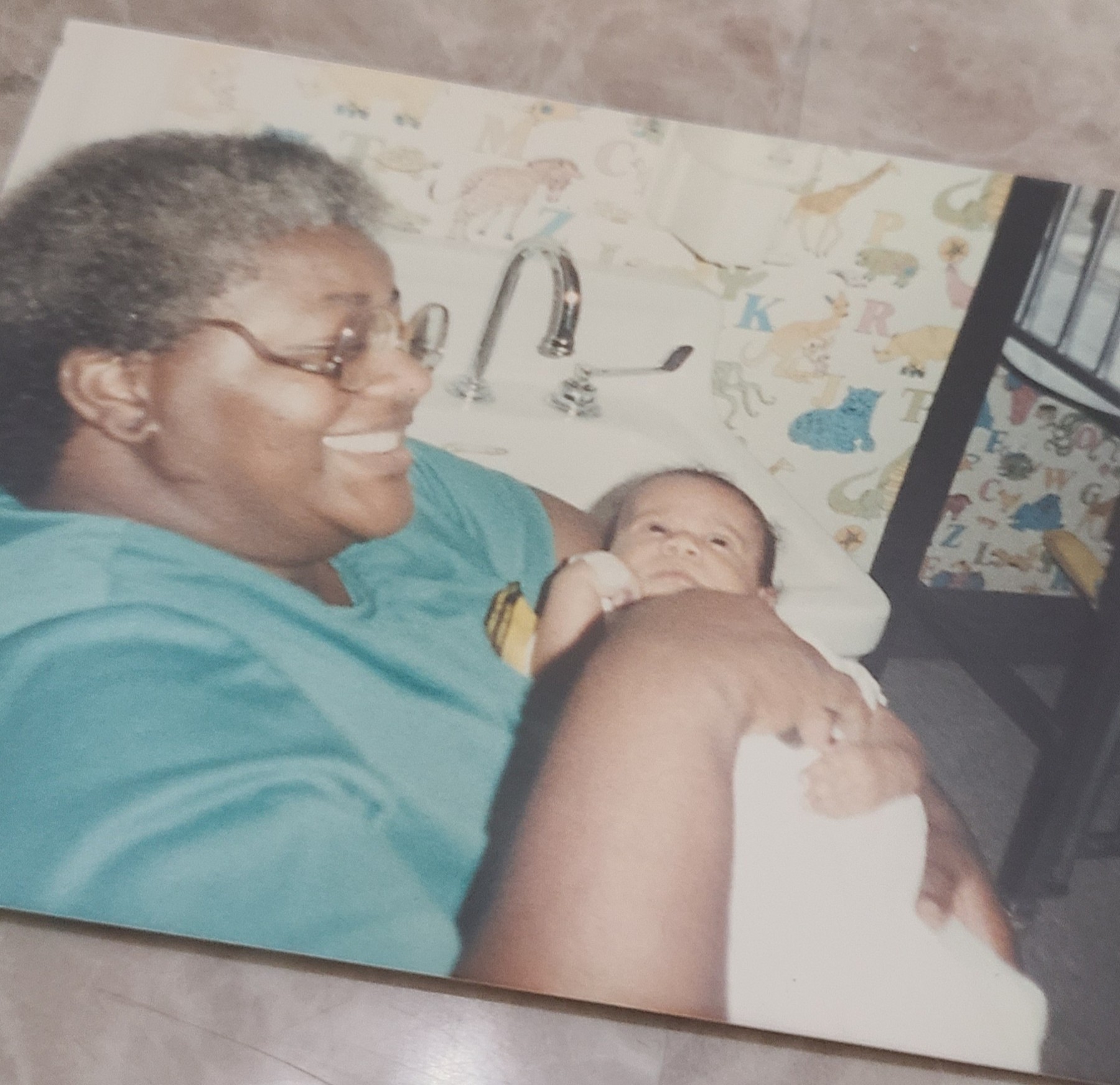
As a young kid, I mostly knew my grandmother as an authority figure. I had spent half my life in Seattle, so I hadn't built the kind of relationship with her that my sister and cousins had. In some ways, she felt like a stranger. I've always felt things deeply, and when we lived with her, there were nine of us in a three-bedroom apartment. It was overwhelming, an assault on my nervous system.
Her "house" was a two-floor apartment on Stranahan Street in Homewood, a neighborhood in Pittsburgh's East End. The front door was at the top of a set of stairs that led down into the apartment.
This memory starts with a pounding on that door.
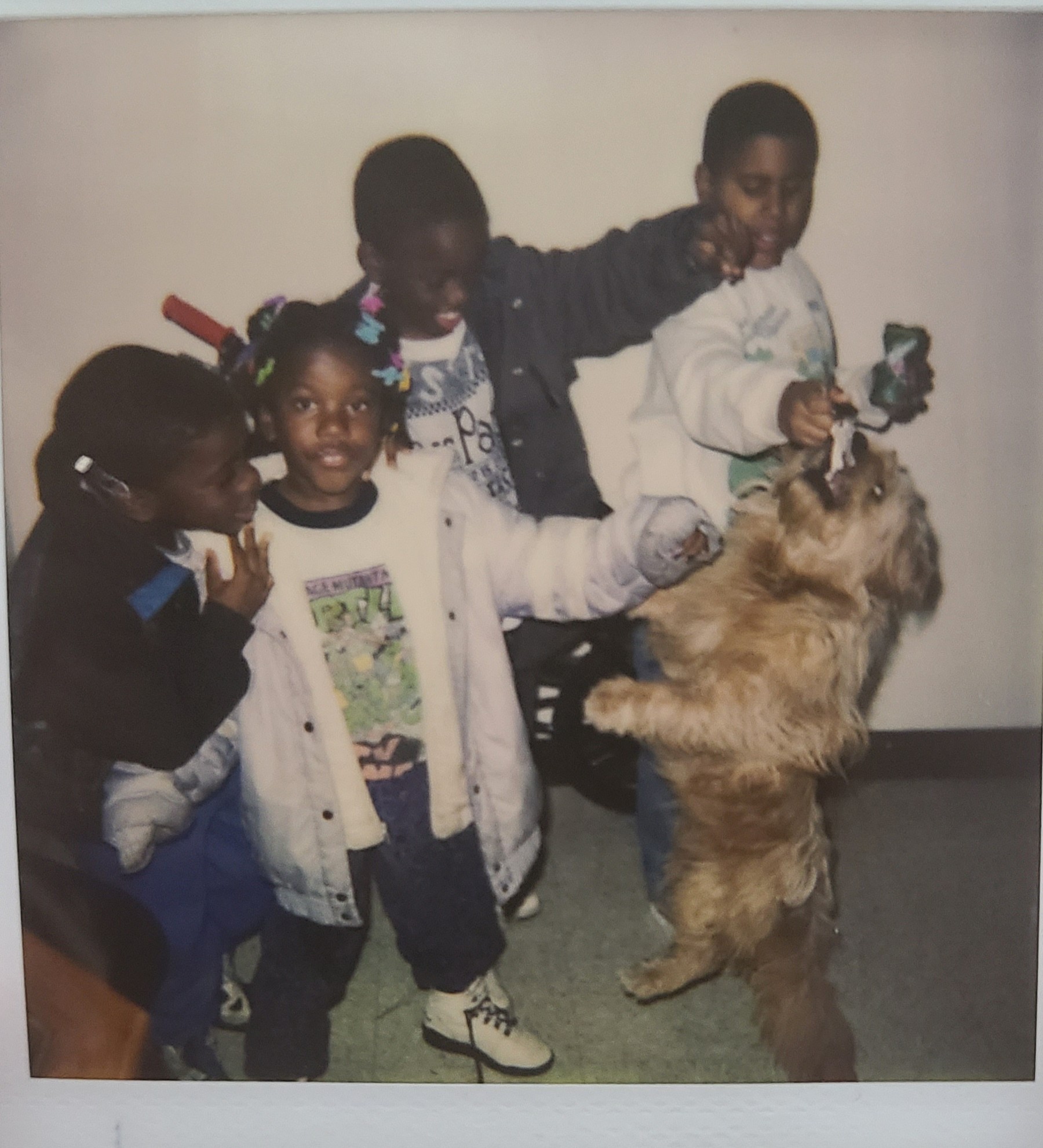
I was in the living room with my younger cousins when we heard my grandmother arguing with someone. She sounded like she was in distress. We were nosy kids, so we crept to the landing, where the stairs turned the corner, to see what was going on.
The man from Rent-A-Center
An employee from Rent-A-Center had come over a problem with her bill.
Rent-A-Center, like Rainbow Rentals and other rent-to-own companies, offered people, often people with low incomes or limited access to credit, a way to rent things they couldn't buy outright. In Pittsburgh you rarely found these stores in well-off neighborhoods. They clustered in lower-income communities, where people had fewer options for traditional credit.
The payments were small and came weekly or every other week, which made these deals feel like a path to owning something nice. But the total cost could end up double or triple the item's price, or more. When a family's finances were already unstable, it was hard to keep up. People could lose the item and everything they'd already paid.
Later, I learned more about the history of predatory lending and the harassment people have described from rent-to-own companies, including repeated calls and unannounced visits to their homes or jobs.
That night, the man was there to repossess something my grandmother was renting. I can't remember if it was a TV, a VCR, or something else. She stood at the door trying to explain that she had paid her bill. He wasn't willing to hear her out.
This was the early '90s. He had driven across town, most likely with instructions from his boss to bring the merchandise back. There were no electronic records he could check on the spot, no quick call to the store to verify the payment. It was her word against theirs.
It was her word against theirs.
Brian Tolbert
What started as a disagreement escalated fast. At some point, he tried to force his way inside. From the landing, we watched my grandmother fight to keep the door shut. It was scary to see a strange man trying to push his way in. It was scarier because the struggle was happening right at the top of the stairs. We were afraid she'd be pushed backward and fall. I was so angry I couldn't protect her, and so worried he would hurt her.
The neighborhood steps in
The commotion must have gotten loud enough for the neighbors to hear. We were poor, but people in our community had each other's backs. That night, the homie from Rent-A-Center learned that quickly, and the hard way.
We were poor, but people in our community had each other's backs.
Brian Tolbert
A few neighbors pulled him away from the house. I can't tell you blow by blow what happened after that, except that he got punched under the car he came in. At some point, while he was getting hands and feet put on every part of his body, one of the neighbors grabbed my Big Wheel and broke it over his head. Then they broke a crutch over his back.
Part of what made this a core memory was watching the men in the neighborhood step up to protect my grandmother. Once they took over, I felt safe and relieved. That taught me a lot about the importance of protecting women. It reinforced my instinct to protect the women in my life and, more broadly, to not only protect women but respect them. Looking back, it still feels heroic. None of those men had to do what they did. I don't remember her being harassed by them again after that night.
That night also gave me a greater appreciation for my grandmother, and for how deeply everyone else respected her.
What I do remember is crying because they broke my Big Wheel, and being promised they'd buy me a new one. Lou, who broke it, made that promise. With everything the adults were dealing with, I didn't feel heard. I felt overlooked.
That promise never came to pass. After years of empty promises, my sadness turned to anger, then resentment, then callousness. Eventually it became a running joke in my family, one we still tell to this day. As an adult, I'm in on the joke and can laugh along, but the boy in me still feels that hurt.
I'm glad my Big Wheel played a part in saving my grandmother. But that might have been the start of my villain origin story. I learned that you really can't take niggas at their word. That distrust taught me to watch for patterns in people's behavior. There still aren't many people I can simply take at their word. When I do, it's because I've seen enough of their patterns to trust them.
As an adult, that's one of the many lessons I'm still having to unlearn.
Who You Gon Call?, July 7, 2026
Oil pastel, 16.5" × 23.3"
From the series Incomplete Memories