Studio Notes
Posting Isn't My Practice
Why I stopped letting the algorithm hold my story, and built this website instead.
I started to realize I wasn't looking for a better place to post finished pieces. I needed a place that could hold more of the life behind them.
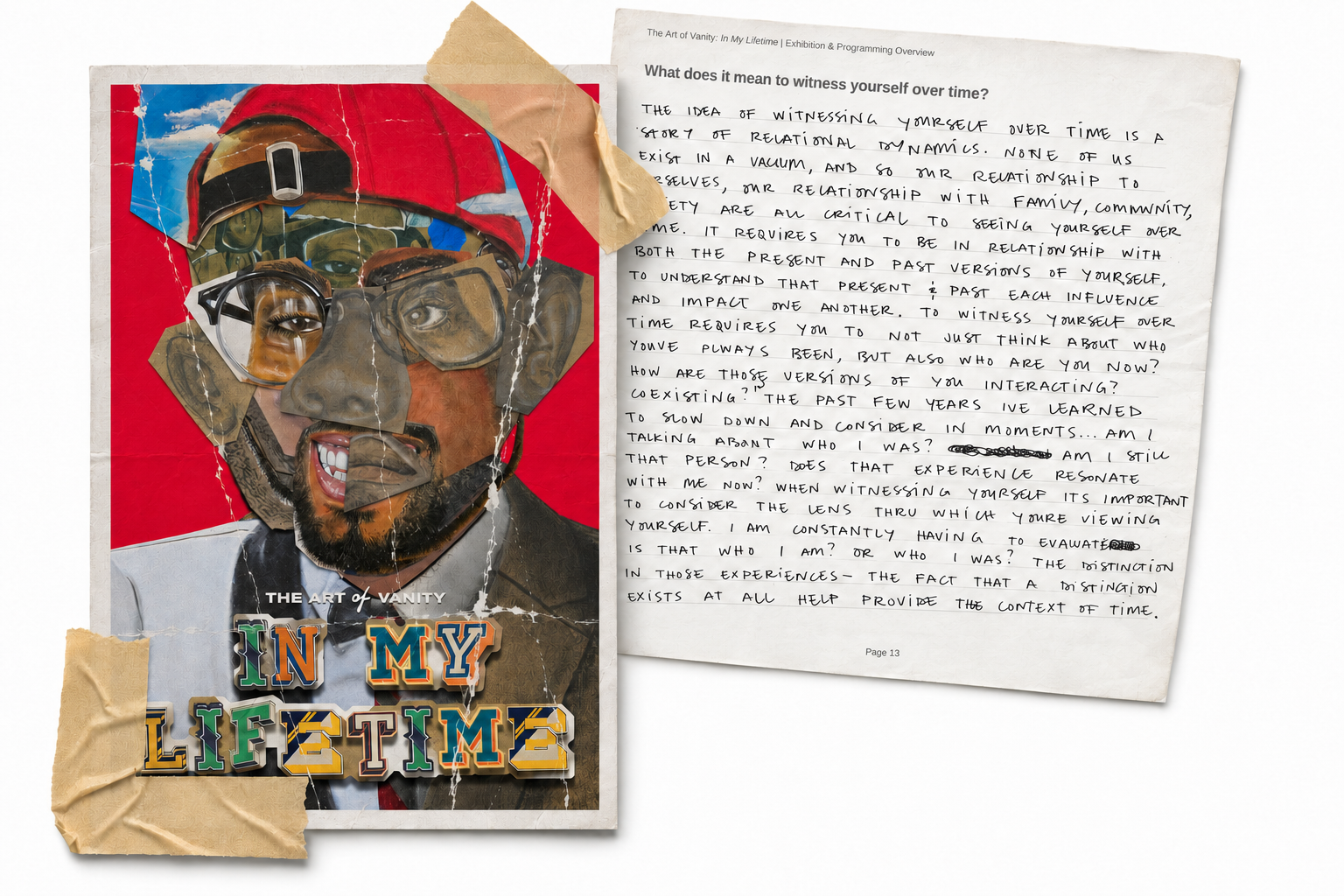
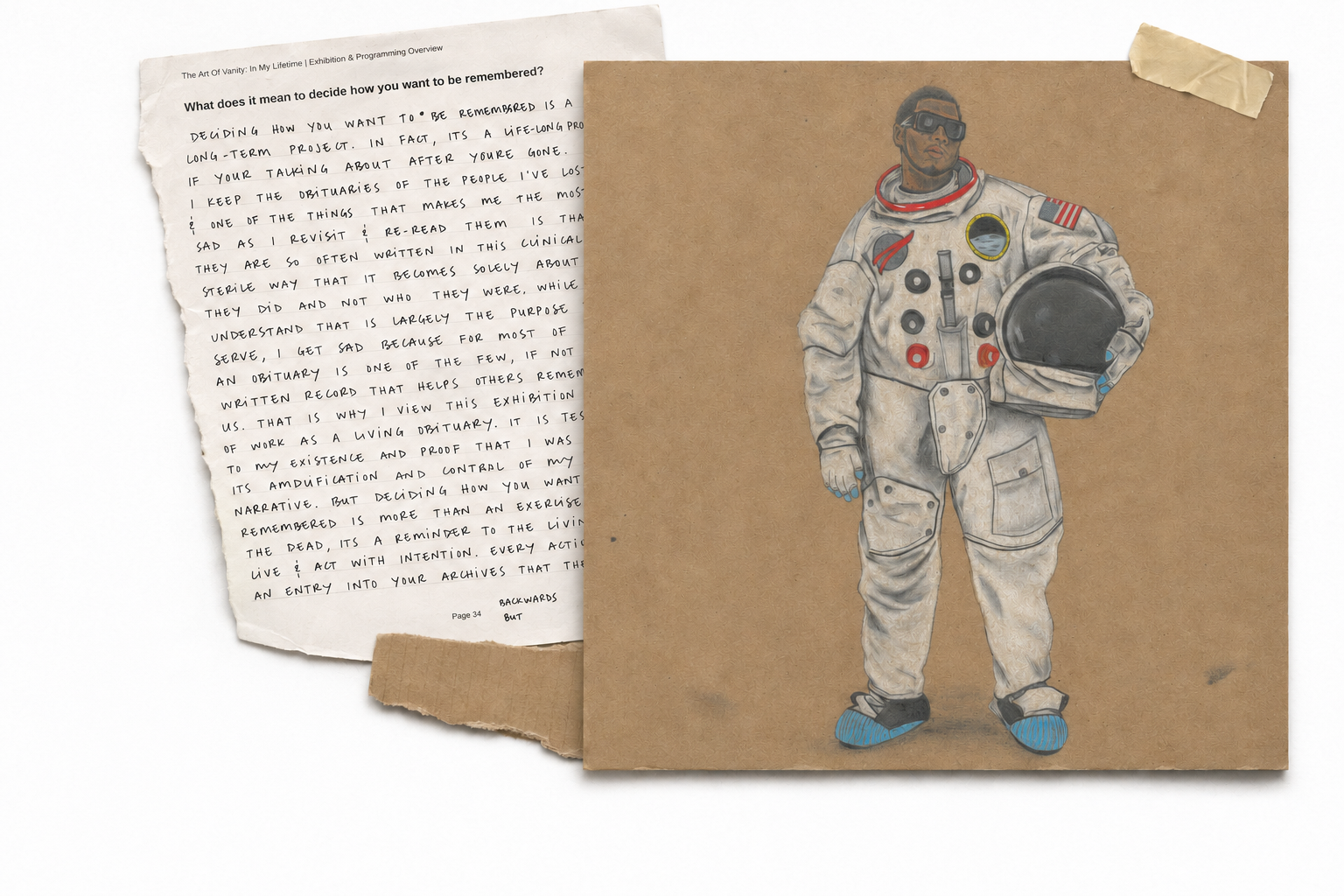
I've spent the past year working on additional art for my next solo exhibition, The Art of Vanity: In My Lifetime. It's an idea I've been sitting with in some form almost since I wrapped up the first installment of The Art of Vanity in September 2024. With most of the art completed, I started working through how I want to organize the experience and the themes of the show by writing about my artwork. My challenge was to find ways to bring people into the experience and expand my self-portraiture practice into a conversation bigger than me. I landed on the premise of self-portraiture as archive, memory, and testimony.
That premise kept bringing me back to a few questions. What does it mean to see yourself clearly? What does it mean to choose how you want to be remembered? And ultimately, after you're gone, who gets to tell your story? I'd asked myself those same questions years ago, while trying to condense my parents' lives into three paragraphs to fit an obituary after each of them passed. Those writing exercises revealed to me how much of my own story only existed with me: in my mind, in untold stories, in documents that were filed away. Answering those questions for the exhibition led to another realization. If I died today, I hadn't done the work to properly capture my own story. That realization is what pushed me to rebuild my website.
For a long time, my website was pretty much what you'd expect from an artist. It had my artwork, a place to buy it, my biography, and an artist statement. It did what I needed it to do, but it didn't feel like a full account of my practice. It didn't feel like me. I know art is personal for every artist. But so much of my art practice is deeply personal in a way that's hard to separate from me. I am the art. And that means the viewer fully experiences me. Yet my website didn't reflect that. It felt sterile. Disconnected.
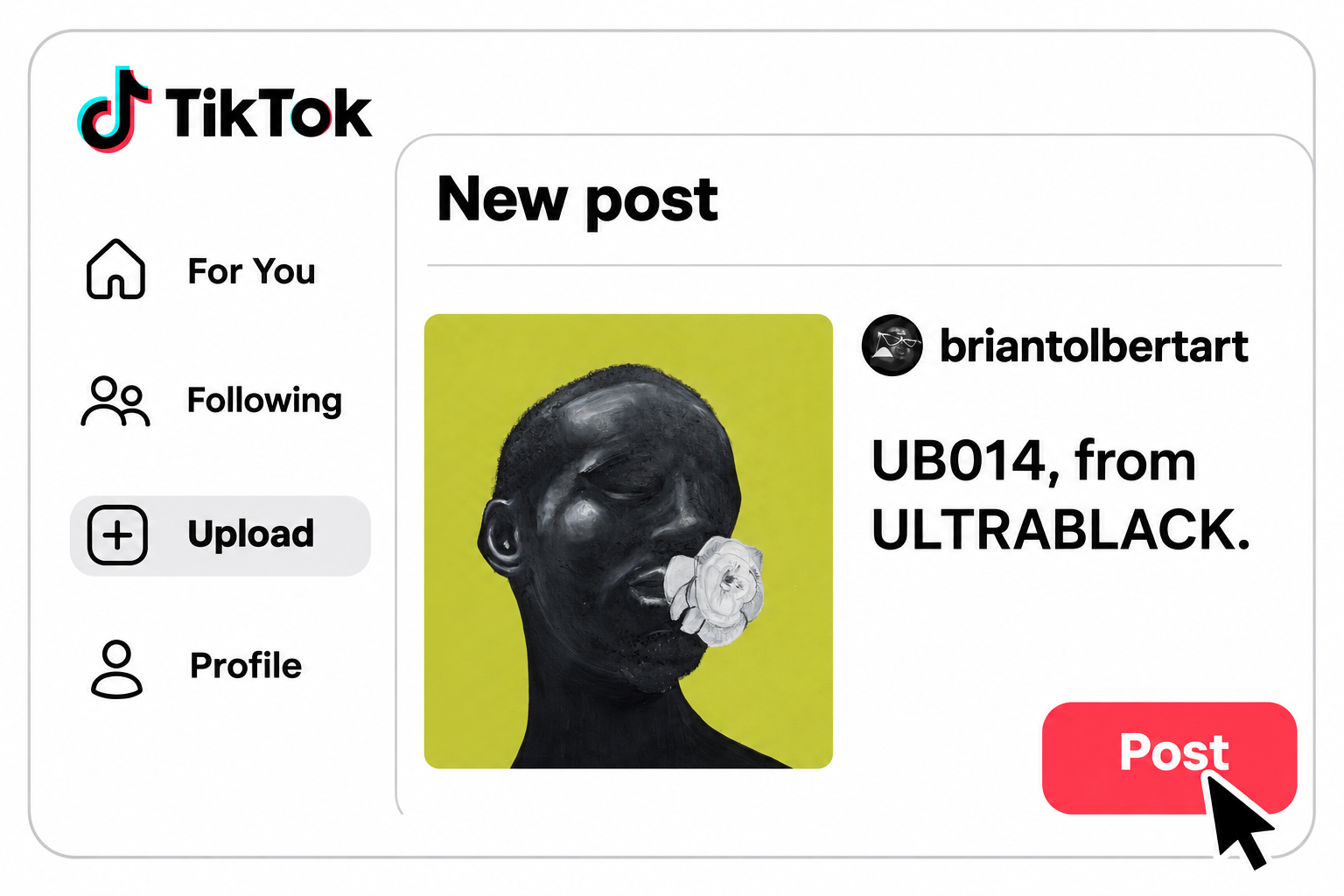
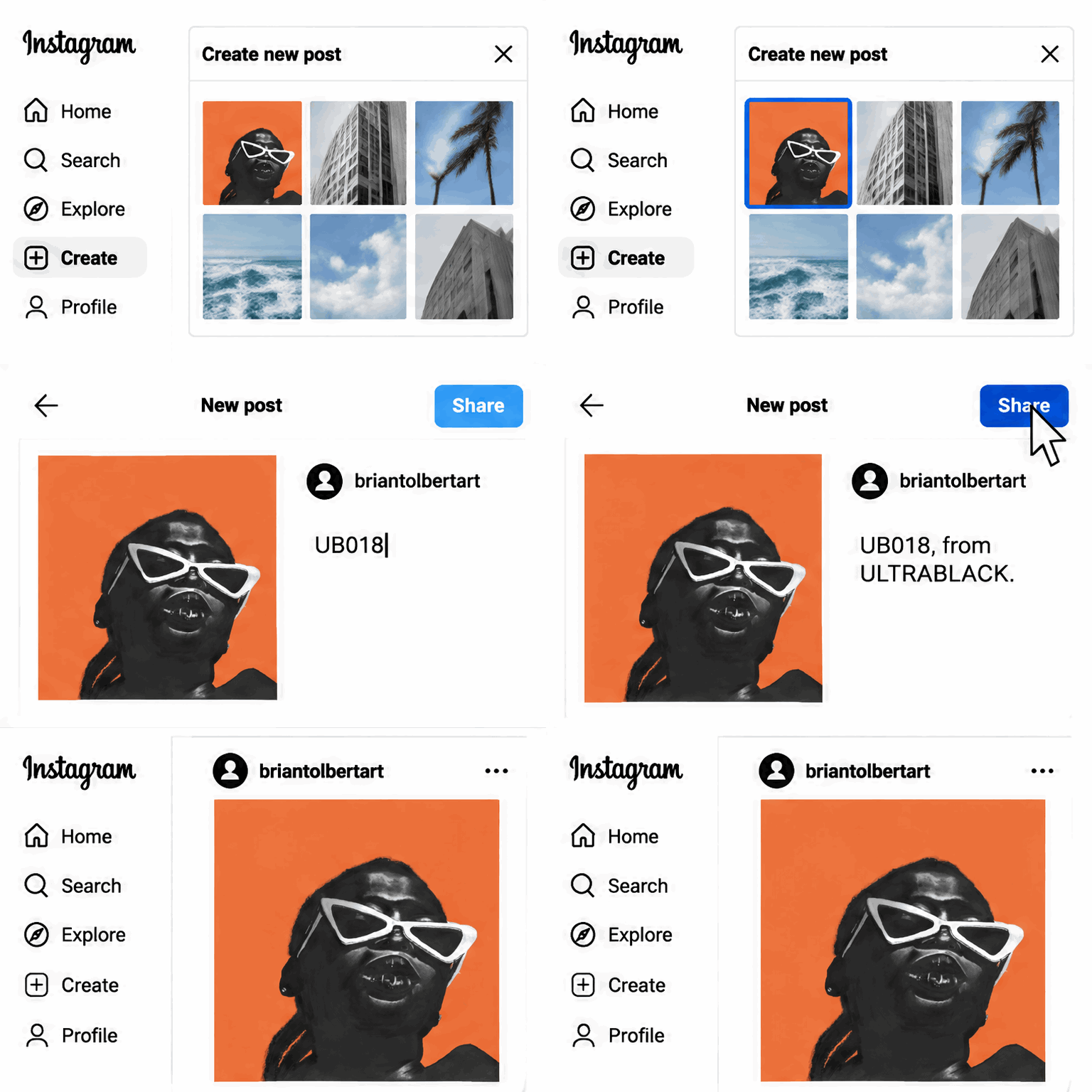
Over the past two months, as I've been rebuilding it, I keep coming back to how much I've been leaving out. I'd finish a drawing, take a photograph, write a caption, and share it. The image would go out into a feed, and then I'd move on to the next thing. For a long time, it felt like my practice was just making things to beat the algorithm. The promise of social media for me has been the ability to communicate broadly to the masses. It's a marketplace to reach people and establish community. But somewhere along the way, I got wrapped up in the idea that posting was my practice. My art practice has never been just an image or a post. I started to realize I wasn't looking for a better place to post finished pieces. I needed a place that could hold more of the life behind them.
“Somewhere along the way, I got wrapped up in the idea that posting was my practice.”
— Brian Tolbert
Regardless of what I'm trying to communicate through a particular piece, there's so much thought and intention that goes into what I create and how I present it to the world. A lot happens before something becomes a finished work. My practice includes whatever was happening in my life when I made it, the memories I was working through, the people who influenced it, and the questions that stayed with me afterward. I take photographs while I'm working. I record thoughts, revisit old drawings, and spend time trying to understand why an image means something to me. I plan exhibitions, change my mind, make programs and promotional pieces, and have conversations I keep thinking about long after an event ends. Some of those things help me make the next piece. Some never turn into artwork at all. That doesn't make them separate from my practice. So how do I actually capture my practice? How can it fully reflect me? And where does it live?
I've lost parts of my story before
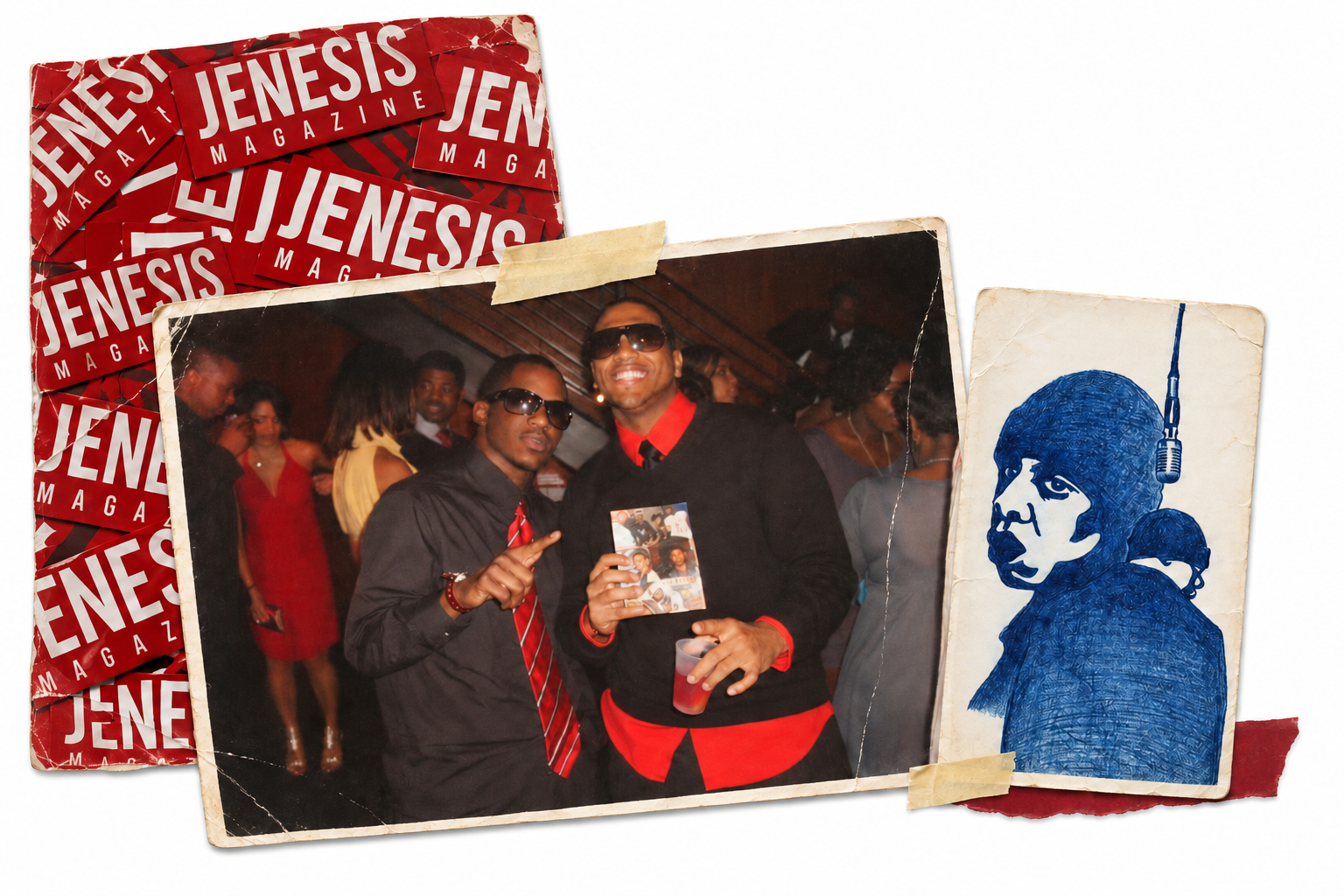
Part of why this matters goes back to JENESIS Magazine. When I was younger, I started an online publication covering music, fashion, visual art, and Black culture. We were trying to give people a place to tell their stories. After we stopped publishing, the domain and website disappeared, and so much of what we made became difficult to find. I remember going back to reference something and realizing it wasn't there anymore. I wrote more about that loss in What We Choose to Keep, along with the artwork my mother saved, from my childhood all the way through my college portfolio. I later threw it away while I was grieving her. Some photographs I posted to Facebook are now the only traces I have of those pieces. There's a contradiction in that. The same social platforms I'm tired of depending on have also kept things I might otherwise have lost completely. That experience taught me that sharing something and being able to find it years later are two different things.
“Sharing something and being able to find it years later are two different things.”
— Brian Tolbert
Facebook also taught me the flip side. Frequently Fly Clothing, the first brand I ever released into the world, is another chapter in losing parts of my story. Even though I had a website to handle transactions, so much of the community I built around Frequently Fly lived on Facebook at the time. I spent several years building a community of about 5,000 members, until one day my account got flagged as spam and I was locked out. That was 14 years ago, and to this day, I still can't recover the account. It cut me off from my audience and killed a lot of the momentum I'd built. That experience taught me that building community on someone else's terms can leave you on the outside looking in. Both are lessons I don't want to have to learn again.
A different way to experience the work
I've been trying to build the website around that realization. I still want somebody to be able to visit and simply look at the artwork. But if they're curious, I want them to be able to go further. On some artwork pages, you can hear me talk about the piece through an audio reflection or read the transcript. With AR-enabled works, there's another visual experience beyond the still image. The exhibition archives hold photographs, programs, and other material from shows that could otherwise become a few old posts scattered across my accounts. I started Studio Notes because I wanted somewhere to write about the memories, questions, and experiences that follow me into the studio. I wasn't interested in making every story into an exhibition. I wanted to share things simply because they mattered to me, even when I wasn't sure where they belonged. Studio Notes gives those experiences somewhere to live as writing.
I don't think all of this makes the artwork more valid. And I don't believe every piece needs to be explained. Sometimes I want the image to do the talking. What matters is that the other parts of the story have somewhere to exist when I choose to share them. There's a difference between seeing one drawing in a feed or on a webpage and being able to move through the thoughts, memories, sounds, and records around it. The piece is still there. But the experience no longer has to end at the image.
“The piece is still there. But the experience no longer has to end at the image.”
— Brian Tolbert
Bringing the everyday voice home
I missed having a place to think out loud. As part of this journey, I've reevaluated my relationship with social media. It's always been something I have to be intentional about, because for me, there's a risk of losing myself in it. As an introvert, social media was a way for me to communicate more broadly with people I may never encounter. It also gives me a platform to share my random, unhinged, and unfiltered thoughts. And while I'm glad people connect with me that way, my goal is always the art. It becomes a conflict when the parts of me I'm amplifying start to overshadow the art.
Social media is beautiful because I can share a quick observation or an unfinished thought, but it can also make it hard to hear my own thoughts. I don't think our brains evolved to handle this much stimulation. For me, there's the experience of ingesting the thoughts of so many random people. There are the parasocial relationships born out of how we interact on these platforms. There's the dopamine drain on our brains. All of it makes it hard not to lose myself to an app. I wanted to keep the part of the experience that lets me share randomly, without feeling like I had to return to an outside platform every time I had something to say. That's why I built Out Loud into the website. It's a place for updates, random thoughts, and the things I notice. Those posts can sit alongside my artwork, writing, and archive instead of disappearing into an entirely separate feed. I don't want outside platforms to be the primary or only places where my voice exists.
Owning the context
I'm tired of feeling like I have to keep up with an algorithm just to reach people who've already decided they're interested in what I do. And I'm uneasy with how much control outside platforms have over our information and over what stays visible. I don't think the answer is pretending I can abandon every one of those platforms. They've helped me meet people, share work, and keep memories, too. I'll still use them to point people toward the work. But what I can do is build a place where I make more of the decisions. I can decide what sits beside a piece of art. I can keep an older reflection visible without reposting it. I can connect a childhood memory to a drawing, or a drawing to the exhibition where it appeared. I can let someone follow my work without asking them to keep up with whichever app I'm using that month. The difference, to me, is not just owning a domain. It's having more say in how my story is told.
“The difference, to me, is not just owning a domain. It's having more say in how my story is told.”
— Brian Tolbert
Keeping it is a responsibility, too
I'm trying to think beyond how the site looks today. I keep the website code backed up through GitHub so I'm not starting from nothing if I ever need to move it away from my current host. That's one step, not the whole job. The writing, images, audio, records, and interactive experiences need their own plan for keeping and moving them. I'm building this as I learn. I don't think the site is a finished archive, or that putting something online makes it permanent. I just want to be more intentional than I was when I was younger about what I save and how I keep it.
What I hope someone finds
When I went to see Jerrell Gibbs's Come home with me, I recognized pieces of my own life in paintings built from his family's memories. His stories weren't mine, but I knew something about those rooms, those backyards, and those ordinary moments. I wrote about that in What We Choose to Keep because it reminded me that the most personal things we make can leave room for somebody else's memories. That's part of what I'm hoping this site can do. Maybe someone comes for a portrait and stays for a story. Maybe a reflection reminds them of their family. Maybe they hear me explain something and understand the work differently. Maybe they start to think about how their own story will live beyond them. Maybe they don't click any further than the image. All of those experiences are valid. I spent years thinking about what I wanted people to see when they looked at my artwork. Now I'm also thinking about what I want them to be able to find when they look beyond it, and what parts of this record I want to leave for myself to return to. Because if someone ever has to tell my story, I want them to have more than three paragraphs to work with.
Related on this site
- SeriesThe Art of Vanity
- ExhibitionThe Art of Vanity
- ArtworkFrequently Fly
- Studio NoteWhat We Choose to Keep
- Studio NoteInside the Dark Room with Brian Tolbert