Momma's Many Vices
What I hadn't connected, until recently, was smoking every day as a way to feel connected to my mother again.
Brian Tolbert
"Hi, my name is Brian, and I'm an addict."
That's how people introduced themselves at Narcotics Anonymous meetings. Growing up, I heard that line over and over, sometimes several times in one night, several nights a week.
My mom was a member of NA. Because she didn't have a babysitter, I became an honorary member by default. I was usually the only kid there, and I never sat in the chairs. You could generally find me off in a corner, drawing in my notebook by myself. This was the early '90s, so there was no phone to entertain me and no tablet to watch movies. There was just me and my art, doing my best not to be bored.
It was miserable. I felt overlooked and out of place, and I wanted to be anywhere but there. So I drew whatever would take me away: Teenage Mutant Ninja Turtles, superheroes, sometimes characters of my own. Drawing was always a refuge. Creating is all-encompassing, and it let me escape from wherever I was.
The rooms
I have vivid memories of what people called "the rooms." They were always in some stuffy place I didn't want to be, usually a church basement, with rows of metal folding chairs or chairs arranged in a semicircle. There'd be a table with bright neon keychains, a stack of royal blue Narcotics Anonymous books, and some stale coffee.
NA is a nonprofit, international, community-based organization for people recovering from addiction, active in more than 143 countries. It's built around members learning from one another how to live drug-free.
The meetings had a predictable structure, though I didn't understand back then that the structure was intentional. It gave people something those actively battling addiction often need: a steady routine. I could count on every meeting to open with a welcome, include some discussion of the Twelve Steps, and close with a prayer circle and the Serenity Prayer. Then everyone would finish with the meeting's battle cry: "Keep coming back. It works if you work it!"
The testimonies were never predictable.
That's what I call them, anyway. After the introduction, someone would sum up some of the worst things that had happened in their life, explain how those experiences led them toward substance use, and talk about where they were in their recovery. Some people had been clean for five, ten, or fifteen years. Others were on day one. Every once in a while, someone would come in high because they'd hit rock bottom and were out of options.
I was an observant kid, and it was hard not to absorb what I heard. The stories about drug use weren't what stayed with me. It was what happened afterward. I heard about people getting high and crashing their cars, burning down their homes, accidentally killing family members, contracting HIV from sharing needles, and experiencing sexual abuse. I heard about addiction leading to divorce, to children who no longer spoke to their parents, to family members cutting ties after their trust had been betrayed too many times to repair.
No one story stayed with me more than the rest. But the cumulative effect was clear: I always said I would never be an addict.
I'm 41 as I write this, but I can still remember those meetings I sat through at six, seven, and eight years old. I learned a lot in those rooms. I learned about choice and consequence. I learned about redemption. More than anything, I learned about the humanity in all of us.
More than anything, I learned about the humanity in all of us.
Brian Tolbert
I don't think the people in those meetings were villains or heroes in their own stories. They were simply people, baring their souls, sharing their shame, and trying to figure out this life shit. Society often discards people it doesn't understand or doesn't see as contributing members. Those rooms showed me the humanity of people in active addiction. Many of them became my mother's friends. Getting to know them gave me a way to begin understanding how complex people, and human behavior, really are.
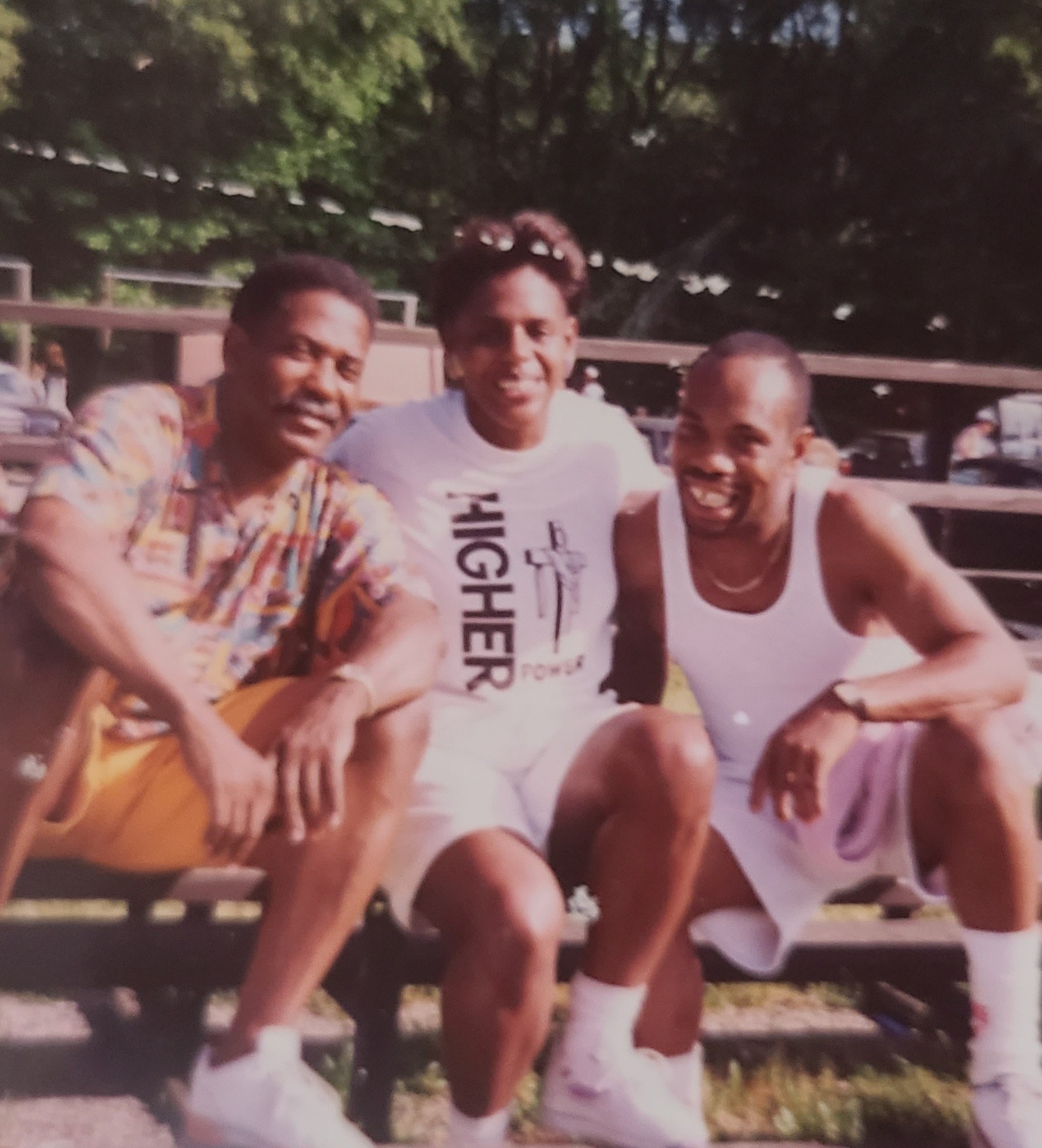
One of the things I appreciate most about my mother is that she never hid her flaws from me. She wasn't reckless about exposing me to them, but she let me see her as a full human being. As a kid, that could be hard, because some things you can't fully understand until life teaches you. That transparency helped me understand her as a person, not only as a parent. It has helped me understand myself, too, as I make my own way through addiction. Her openness became a road map for how I learned to share my own story.
The many forms
Growing up, I thought about addiction narrowly. Whether people were talking about drugs or alcohol, I had a particular picture of what an addict looked like. But addiction can take many forms, and over the course of my mother's life, I saw some of them up close.
Eventually, my mother realized that NA meetings had become toxic for her, and she stopped going. Her attendance had always felt strange to me. I grew up in a neighborhood where I saw active addiction every day, and compared with some of the people around us, I didn't see her as an addict. I never saw her use, and the things people described in those meetings weren't things I saw at home.
Our neighborhood could be chaotic, but our house was different. It was clean, quiet, and orderly. There were rules, and there was a calm you couldn't find outside, at least until her cigarette smoke interrupted it. That calm made our house a refuge, not just for me but for my friends, too.
A lot of my friends' parents didn't work at all. My mom was constantly busy. She worked full-time during the day, in jobs that ranged from secretary to medical billing, and took nursing classes at night at community college, working toward an associate's degree she never finished. When she wasn't at work or in class, she was in a meeting. I spent a lot of time at home alone. At one point, she was under so much stress that she was rushed to the hospital with chest pains.
Still, we never went without. In fact, our house was often where people came when they were in need. Our neighbor Mark had nine kids living in a three-bedroom place, and some nights they'd borrow an entire meal, one kid at a time. One would knock to ask for bread. Another would come for ketchup. Then another would ask to borrow a pack of hot dogs. We were on food stamps, but we always had enough, and one way or another, my mother always provided. I didn't realize we were poor until I was in my 20s.
That was the mom I saw at home, the one holding everything together, and it's part of why she never looked like an addict to me. Her providing for everyone and her struggle with addiction never felt like a contradiction. That's how I've always understood her complexity.
As I got older, I came to understand that her struggle wasn't limited to, or only about, a physical substance. Like a lot of people, she was dealing with what lay beneath the addiction: whatever drove her toward a drug, a drink, or a habit in the first place. I came to believe that when the source goes unaddressed, the need to fill that internal gap can remain.
I came to believe that when the source goes unaddressed, the need to fill that internal gap can remain.
Brian Tolbert
I saw the fallout from her struggle to address what drove her, and from her repeated efforts to change. Even when the substance changed, some of the patterns stayed. I watched her fill that gap with a lot of things.
Mountain Dew was one of her primary vices, long before her time in NA and long after it. Our house was full of two-liter bottles, which she eventually traded for more compact twenty-ounce bottles. Just like death and taxes, my mom having a Mountain Dew was a certainty. Mountain Dew was so synonymous with my mom that every year on her birthday, my family gathers to do a Mountain Dew toast to her.
Salem Lights 100's
Above all, though, smoking was my mother's primary vice. Salem Lights 100's were her cigarette of choice.
Thinking back, it's wild to remember how prevalent and accepted smoking was in our culture. It's even crazier that, at one time, my mom would give me money and send me to the store to buy her a pack, and they actually sold them to me, a kid. Look how far we've come.
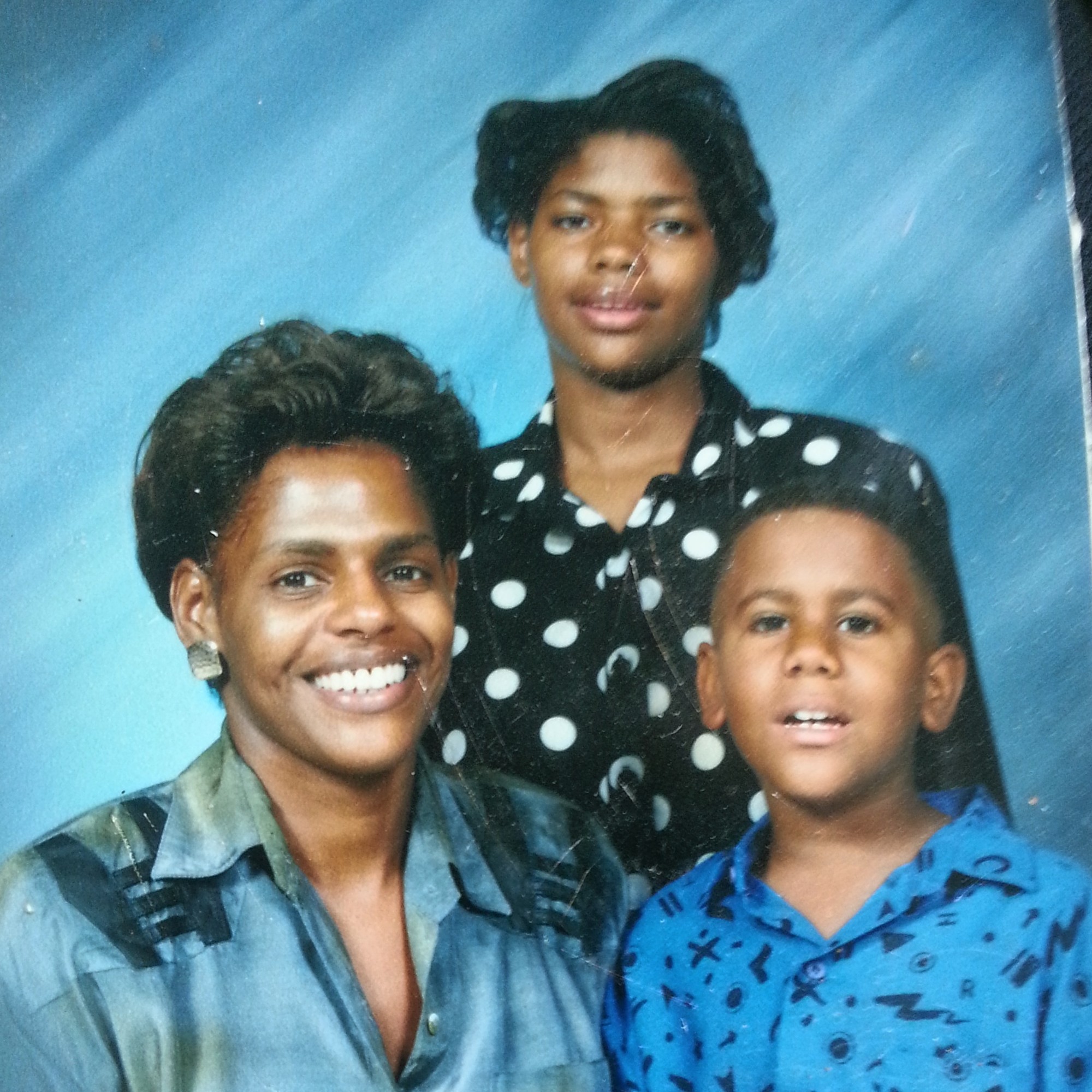
My whole life, I hated cigarette smoke. So did my older sister, Tanesha. It got into everything and ruined everything. I couldn't leave the house without my clothes smelling like cigarettes, my hair smelling like cigarettes, everything. My mom was a chain smoker her entire life, a habit she picked up at 12, so our house always held a not-so-thin haze of smoke.
We had white chairs at our dining room table, and like most families in my neighborhood, we kept them covered in plastic. It wasn't a practical solution, but it was a common one for keeping kids from messing up "the good chairs." My mom smoked so much, and so often, that the plastic on those chairs went from clear to yellow to brown.
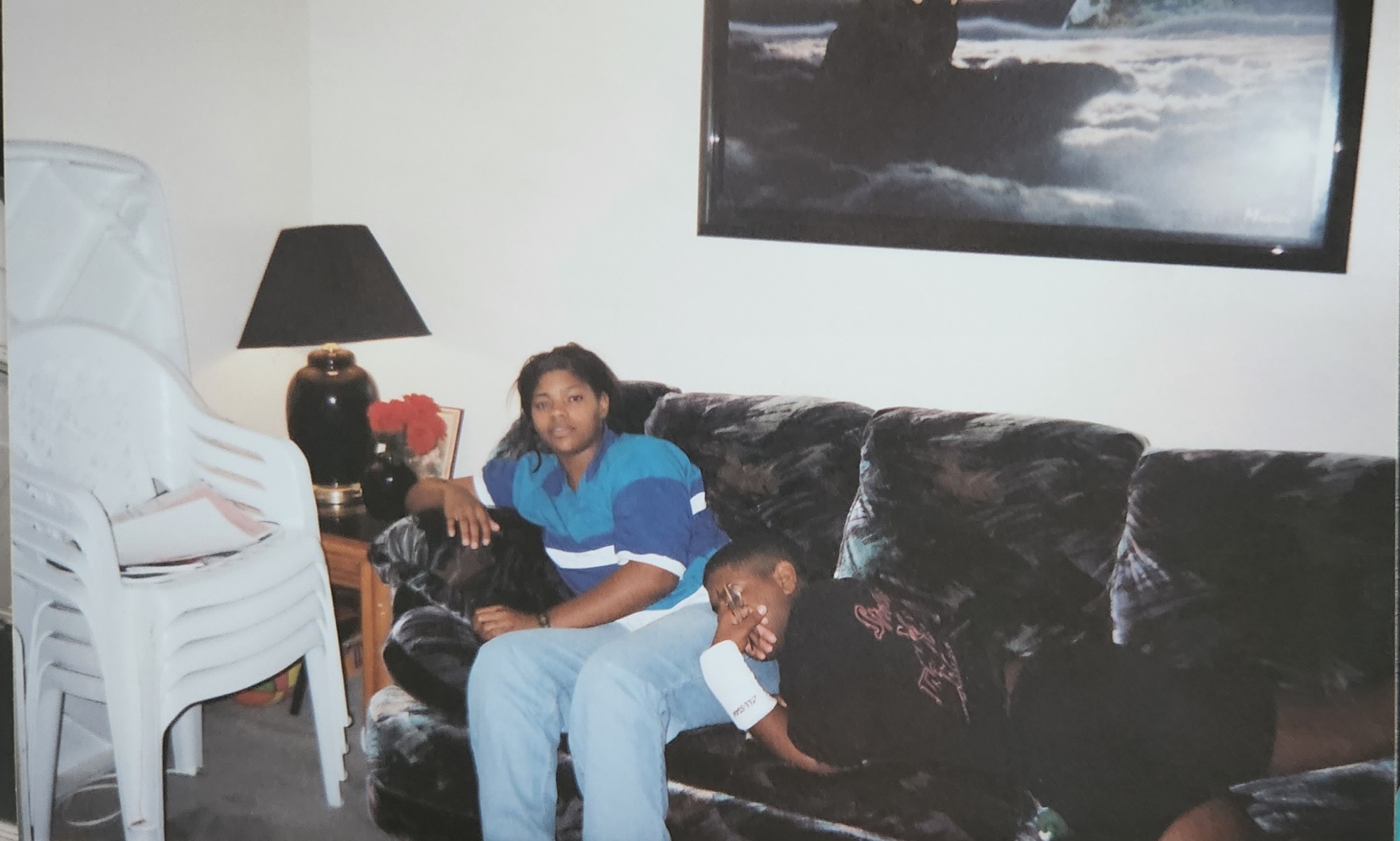
Eventually, my sister and I waged war on my mom's cigarettes. We were angry. The smoke smelled terrible and often made us cough, and we knew it wasn't good for her or us. Tanesha used to throw her packs in the trash, and later started burying them at the bottom so they'd be harder to find. At a young age, I simply refused to go to the store for her anymore. By then, I didn't care how she felt about it. I was fed up, and refusing felt like the only thing I could do. I've been hardheaded my whole life. Once I decided I wasn't going to do something, there wasn't much anyone could do to change that.
Around the time I turned 12, we reached an agreement as a family: my mom could no longer smoke in the house. I guess Tanesha and I had hit our breaking point, and my mother reluctantly gave in to our demands. I finally felt considered. But even those demands were no match for the hold Salem Lights 100's had on her. She smoked almost her entire life, and eventually, it became a factor in taking her life.
But even those demands were no match for the hold Salem Lights 100's had on her.
Brian Tolbert
The patches
When I was in high school, my mother was hurt in an accident on a city bus.
She was coming home from the grocery store one night after work. My mother didn't drive, so we caught either a jitney or the bus everywhere. A jitney was Uber for the hood long before there was an Uber. In neighborhoods Yellow Cab refused to come to, like ours, independent drivers chipped in to share a physical location called a station. They usually worked on a rotation: when a call came in, the next man in line picked up the phone, got the details from the passenger, and negotiated a price before accepting the trip. A jitney was good for grocery runs when you had too many bags to carry, but it was often much pricier than the bus if you didn't have many bags or weren't going far.
That night, it was dark, and the driver must not have seen her. She had already started boarding, with groceries in both hands, when the door closed on her arm and the bus started pulling off.
She tore her rotator cuff. What followed was years of uneventful legal back-and-forth that never resulted in her being compensated for her pain and suffering. The injury needed surgery and a long, long recovery. Over time, overcompensating with her other arm, along with years of wear and tear from recreational tennis, led to her other rotator cuff tearing too.
Throughout that long stretch of surgeries, my mom was prescribed fentanyl patches for pain management. She wore them on her back and changed them every three days. Probably not the best thing for an admittedly recovering addict. But this was the early 2000s, and neither of us really knew what fentanyl was. As a society, we've come to understand the devastation fentanyl can cause. At the time, it was a tool for pain management, and for a surgery that major, it seemed to make sense. If only we knew then what we know now.
I saw the damage the patches did to her, outwardly and inwardly. They brought three-day cycles of an ever-changing personality, and I watched what happened when they wore off. The pain came rushing back, and it brought symptoms of withdrawal with it.
Beyond the cycles, I saw the physical damage. Because the patches were made to be worn for three days, they really stuck to the skin. By then, my sister was out of the house, and it was just me and my mom. She couldn't put the patches on herself, so changing them was my job. I was glad I could help my mom, but at times it was overwhelming. I had my own life I was trying to build and live. I remember washing her back thoroughly just to get the leftover glue off. I remember tending to the scarring the patches caused, and eventually seeing the holes they left in her back. It was scary, and it hurt to watch the scarring get worse and worse.
It was even scarier because I remember the warnings that came with the patches, and not just for her. They were for me, too. If a patch broke and leaked, it could be fatal to the touch. That was always in the back of my mind while I changed them. It was terrifying, but it taught me to slow down and be more intentional.
Other than my sister and a friend or two, I didn't tell anyone what I was handling at home. Back then especially, it didn't feel like my story to tell.
After a while, and a lot of scarring, my mother got tired of the process. By then, pain management had become a dependency. She got her doctor to move her off the patches, and she was eventually prescribed OxyContin. A similar cycle followed.
By then, pain management had become a dependency.
Brian Tolbert
Faith and love
Sometimes the replacement wasn't something you could hold. Over time, my mother put more of her energy into her relationship with God and religion, diving fully into her "walk with God." The roots of that commitment were planted in those NA rooms. NA doesn't present itself as a religious organization or require members to follow a particular belief system. It does encourage belief in a higher power, a power outside yourself, and teaches spiritual principles like honesty, open-mindedness, faith, willingness, and humility.
Many of the members I met practiced those principles through Christianity, though that wasn't a requirement. One of my mom's best friends from NA was Amy, a white woman who practiced Wicca. She was one of the kindest, sweetest people I'd ever met, which was always a departure from what I'd been taught to believe about witches.
The Christian foundation my mother built in NA became a guiding principle in her life after she stopped attending. It made sense to me that the structure that helped her stay sober would lead her deeper into the church. If she believed God had saved her from addiction, it made sense she'd keep turning to God to stay away from it.
God was one part of the story. Love was another. For much of her life, my mother was, in a lot of ways, a chronic love addict. I believe not having a relationship with her father contributed to her choosing men who were also unavailable, emotionally and physically.
Valentine's Day, 2015
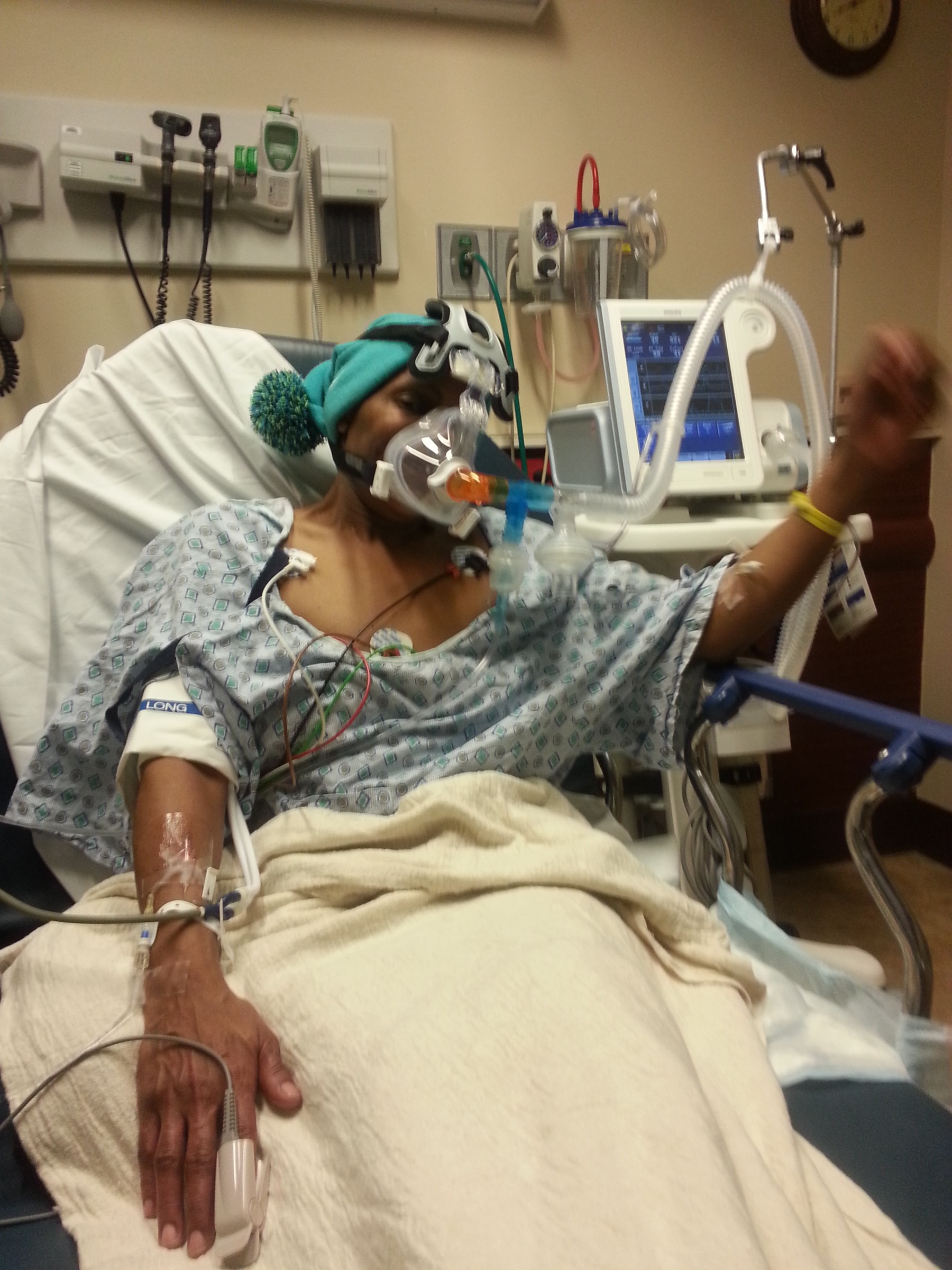
On Valentine's Day 2015, my mother got sick at my aunt's house and was rushed to the hospital. None of us were sure what was wrong. I remember getting there and hearing the doctors say there was a chance she might not recover. They told me I should start thinking about what we would want to do if it came down to keeping her alive on machines or pulling the plug. I was so overwhelmed that I didn't want to entertain the thought or even continue the conversation. Losing my mother was my worst fear.
What we came to find out was that, at some point, my mother had been diagnosed with chronic obstructive pulmonary disease, or COPD. It's a progressive, long-term lung condition that restricts airflow and makes it harder and harder to breathe. She never told anyone in the family. She kept smoking until that day in 2015, when it finally became clear she couldn't anymore. I was so hurt. I couldn't believe how selfish it felt that she not only kept it from us, but kept smoking.
After that hospital stay, she couldn't walk for months and spent five months in physical rehab. From then on, she needed an oxygen tank to breathe. That stayed true until she passed away in 2021. Those years were brutal, and they required an entirely new way of living. Plenty of times, she struggled to breathe, and each time was a horrifying, helpless experience.
Finding balance
Even when the substance or subject changed, the habits and patterns didn't. Balance was never something my family excelled at. That's what brought me to Momma's Many Vices, and to my own struggle to find balance.
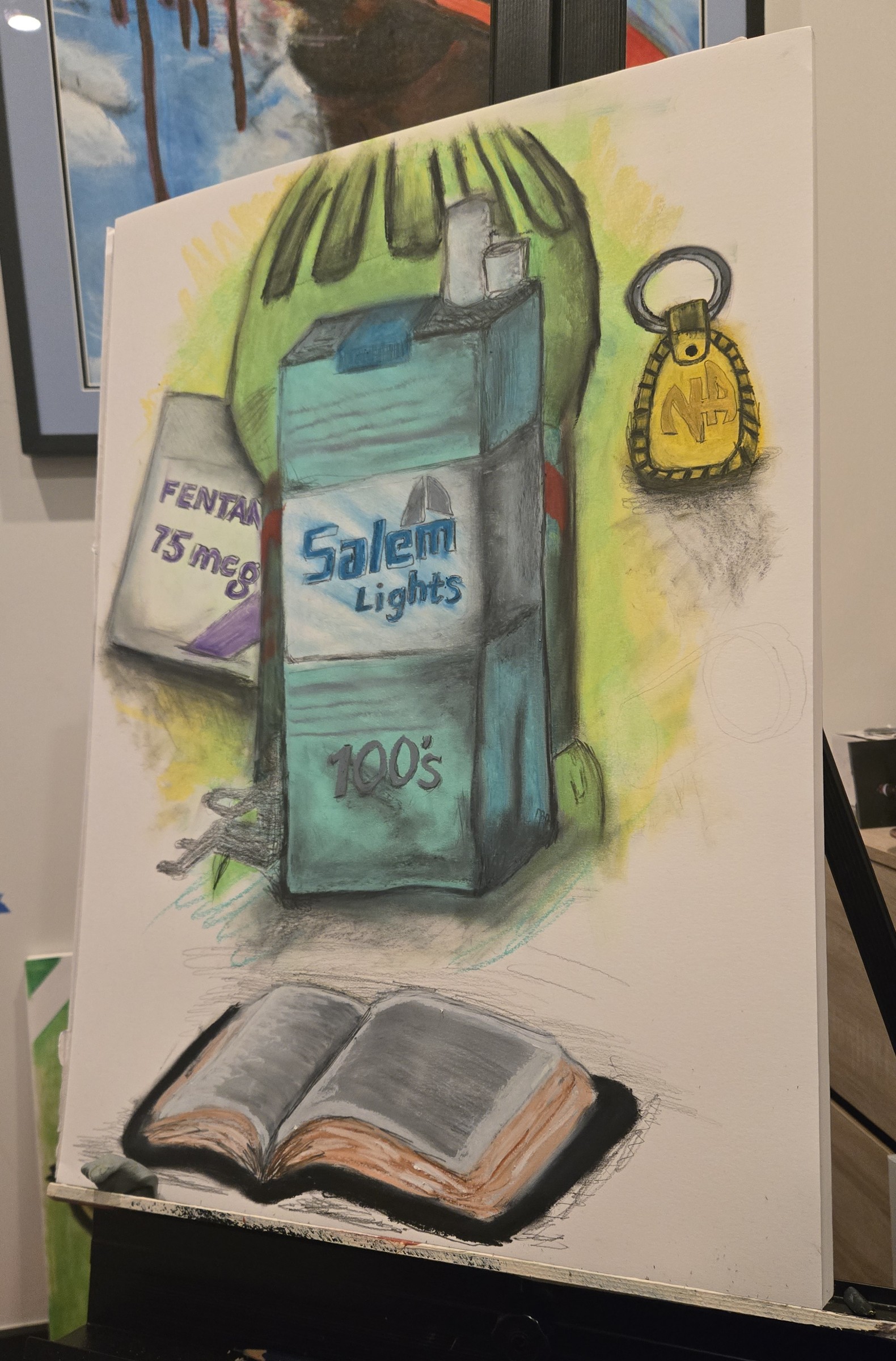
The piece is an oil pastel drawing from Incomplete Memories, a series of rough, loose, quick sketches made as practice and expression rather than for exhibiting. The series comes out of a step in Jonice Webb's book Running on Empty called Breaking Down the Wall: intentionally tuning into my internal experiences and reaching out to the feelings I learned to actively suppress, or wall off, as a child.
At the center is a box of Salem Lights 100's, my mom's cigarette brand of choice, with a bottle of Mountain Dew behind it. An NA keychain hangs to one side and a fentanyl patch sits on the other. An open Bible rests in front.
When I first envisioned this piece, I planned to draw only the box of Salem Lights 100's. That box was so ingrained in my memory that I saw it as the whole piece. But as I thought about what those cigarettes represented for her, I kept drawing, and her other vices started to surface. They made their way into the work naturally as I went. Putting the Bible in the same frame as the cigarettes and the patch just made sense. Some people might draw a line between those things, but I already saw the Bible, and her relationship with it, in that light. When I look at the finished piece, it feels nostalgic for all the wrong reasons.
So much of my mom's experience with smoking shaped my own choices, some in ways I didn't connect until recently. My hatred of cigarettes meant I've never even tried one. My time in those NA rooms made me hyperaware of addiction, and at a young age I made it a point that drugs, even recreational ones like weed, simply weren't for me.
But with time I changed. I was 28 when I first started smoking weed. By then, I was a fully formed adult who had done plenty of binge drinking. I'd even had a run with MDMA. Because weed didn't have nicotine or tobacco, I tended to think of it as different, as if smoking weed wasn't the equivalent of smoking cigarettes. And it's true, weed isn't cigarettes. But that doesn't make smoking it harmless.
By the time I turned 38, two years after my mom's passing, I wasn't just a smoker. I was a daily smoker, a chain smoker. Again, balance has never been something my family excels at. I could see how addiction was showing up in me, in my extremist behaviors. What I hadn't connected, until recently, was smoking every day as a way to feel connected to my mother again.
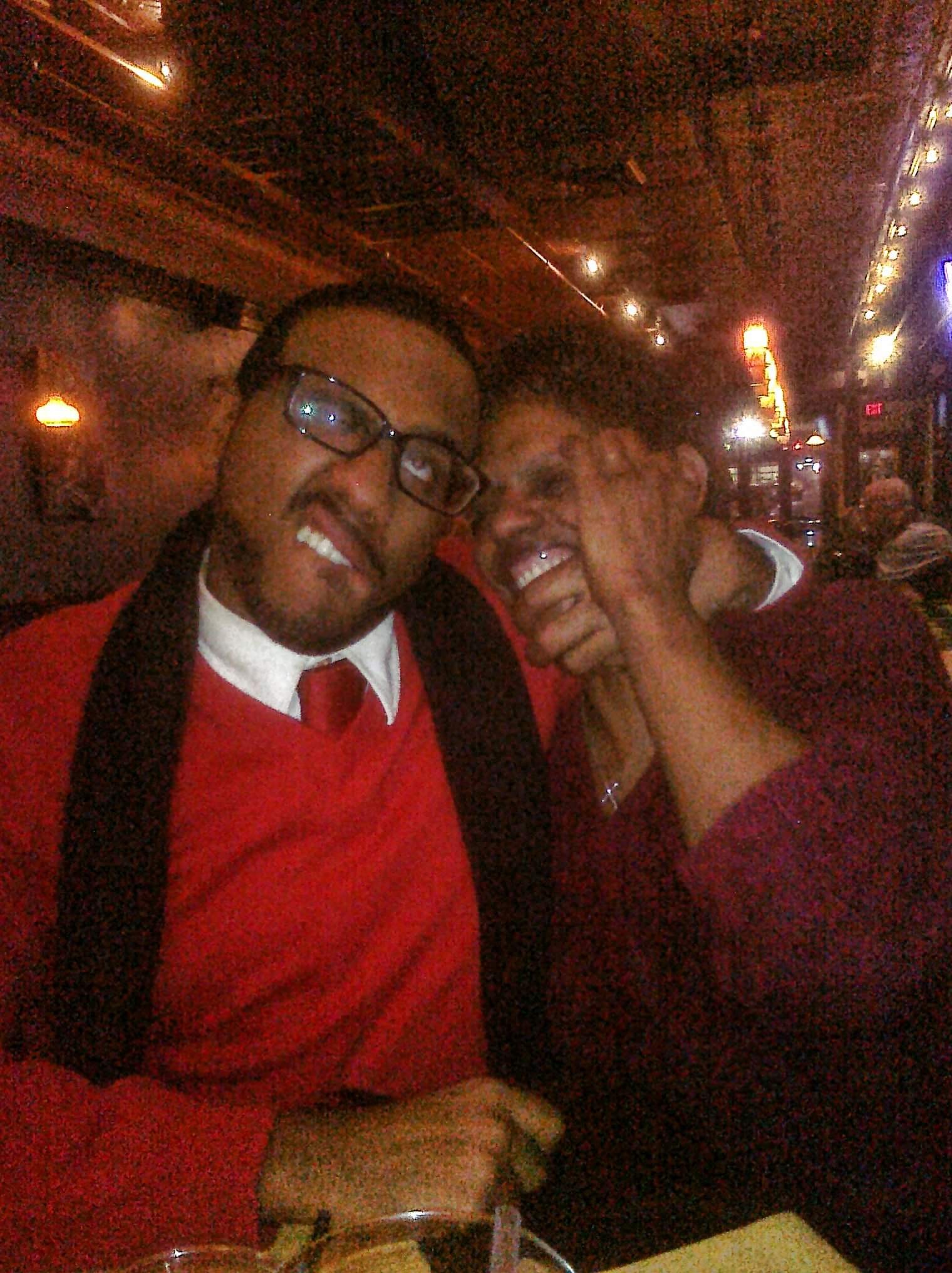
My wife was the one who helped me see it. I was talking with her about finding balance in my relationship with weed, and she suggested that could be part of why I smoke as much as I do. Part of me wanted to deny it, but the truth was so clear I had to accept it. Now, when I smoke, I often think about how much I hated it growing up, and how much I resented my mother for it. I still wonder how I got here.
The truth today is that, in many ways, I am an addict. I love being high. It's one of my favorite things. Back then, all I wanted was to never be an addict.
These days, I still smoke, but I try to be mindful and realistic about its impact. With recreational weed more and more available and THC levels climbing higher and higher, it can feel like a losing battle. Over the past several years, I've started to see weed the way I see social media: these products aren't designed to be used in moderation. The goal is to get you to consume more and more. That, along with my own predilection for escapism, means I have to stay mindful if I'm going to have any chance in my addiction journey.
I was shaped by the stories I heard in those rooms. As I navigate my own relationship with addiction, I'm grateful I can look back at my mother's experiences, and the experiences of the people in those meetings, as a kind of road map. It isn't perfect. But it shows me what to watch for, which pitfalls to avoid, and how to give myself grace along the way.
Momma's Many Vices, September 17, 2026
Oil pastel, 16.5" × 23.3"
From the series Incomplete Memories